
For 35 years, Wisconsin Public Radio’s Peabody Award-winning series To the Best of Our Knowledge (TTBOOK) has explored big ideas and beautiful questions.
Although the program will sunset this fall, its legacy lives on in the American Archive of Public Broadcasting. The newly launched To the Best of Our Knowledge Special Collection features over 1,000 episodes to keep curiosity sparked for years to come, with interviews from some of the world’s most influential scientists, writers, musicians, politicians, and thinkers. Guests include Jane Goodall, Susan Sontag, David Lynch, Margaret Atwood, JD Vance, Barack Obama, Ann Patchett, and many others.
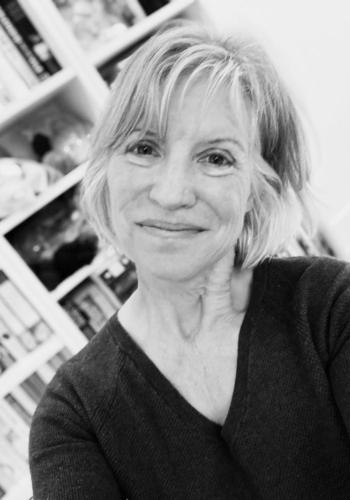
The American Archive of Public Broadcasting spoke with Anne Strainchamps, host and co-founder of the show, about what TTBOOK has meant to her over the years and how she hopes it will continue to inspire listeners in the future.
Can you share with us something about how the show began? How did the idea for To the Best of Our Knowledge come to life, and what was the initial vision for it?
The original idea was to bring the concept of intellectual journalism – the journalism of ideas – to the public airwaves. And the inspiration had everything to do with where we were: at Wisconsin Public Radio, a service deeply and historically rooted in the Wisconsin Idea, the principle that education should influence people’s lives beyond the boundaries of the classroom. (The Wisconsin Idea is also woven through the history of the public broadcasting system itself, but that’s another story.) At the time, the director of Wisconsin Public Radio was Jack Mitchell, one of the founders – and first producer – of All Things Considered. Jack liked the idea of updating old-fashioned, “stuffy” educational radio to create something new: a modern hybrid that would be both journalistic and timeless. A radio-magazine of ideas for our time.
How do you feel the show has evolved over its 35 year run?
A lot of people have worked on the show over the years and every producer, host and interviewer brought their own sensibility to it. That’s the beauty of working with a very small team – I don’t think we’ve ever had more than 7 people on the staff. Of course, public radio changed a lot during those decades and we adapted along with it. In the last decade in particular, Joe Hardtke’s sound design gave the show a lush, almost dreamy aesthetic that added a layer of sonic beauty to the big ideas and personal intimacy of the interview format.
The show covers such a fascinating range of topics, from science to culture. What has driven the curiosity behind your topic selection?
Well, we’ve lived in interesting times, haven’t we? The goal was always to chart the ideas and intellectual currents shaping our culture, and we’ve lived through one of the most extraordinary periods of change in human history, so there’s been a lot to talk about. But I think the curiosity actually grew out of the show’s democratic mission and that goal of making big and complex ideas relevant and exciting for a general audience. So we cultivated a certain cross-disciplinary playfulness – the old “physics for poets” concept of putting ideas from one field into conversation with another.
Across all the episodes and collections, is there a particular favorite of yours? What makes that specific episode or theme so special to you?
That’s like asking a parent to choose a favorite child! I’m very fond of our series – Hope, Kinship, and Deep Time – because of the way we develop an idea in depth, across multiple episodes, and in so many unexpected directions – to me, those are among the most beautiful episodes we produced.
What unique opportunities has the platform of public media provided for To the Best of Our Knowledge? Why is public media the ideal home for a show like this?
To the Best of Our Knowledge would never have existed without public media – or without public radio listeners. An unapologetically brainy show was never going to be a commercial hit, because the currency of commercial media is celebrity. And while we featured our share of notable guests over the years – Nobel prize winners, famous writers, public intellectuals – the majority were not household names. They were no less original or deserving of recognition and we were proud to shine a light on their work and ideas.
Now that To the Best of Our Knowledge is being archived and made accessible by the American Archive of Public Broadcasting, what do you hope listeners will gain from this? What does it mean to you to have the show’s legacy preserved in this way?
I’m profoundly grateful. To the Best of Our Knowledge episodes have always had a “long tail.” Many are evergreen or perennial. They’re used in high school and college classrooms and every time we air a repeat, we hear from new listeners to whom the subject or the guests are fresh and valuable. Preserving the archive and making it available and accessible to everyone means the investment public radio supporters made in the show won’t be lost. Knowledge should be free and it makes me very happy to know these episodes will live on as part of our shared intellectual commons.

 blog.americanarchive.org