
The following was submitted by 2022-2023 Public Broadcasting Preservation Fellow, Dave Sohl.
Hello from Chicago!
The time that I’ve spent in the Public Broadcasting Preservation Fellowship (PBPF) has made me think a lot about communities, and what it means to belong to one.
For any readers who are unaware: the PBPF is “designed to provide graduate students with the opportunity to gain hands-on experiences in the practices of audiovisual preservation; address the need for digitization of at-risk public media materials in underserved areas; and increase audiovisual preservation education capacity in Library and Information Science graduate programs around the country” – from our Residency Handbook.

During my year-long stint in the fellowship, I helped to establish a digital preservation lab at Dominican University, and I digitized 134 videotapes for Chicago’s PBS television station. These tapes contain raw materials shot for two episodes of the documentary series WTTW Journal.
The series ran from 1989-1994 and was a joint effort between WTTW and the philanthropic Chicago Community Trust, and each episode was intended to address problems that Chicagoans faced or to celebrate unheralded but remarkable citizens.
Many of the profiled people may not be with us any longer, but their contributions still resonate, and certain problems Chicagoans faced back then are unfortunately as relevant as ever.
One of the episodes I digitized materials for was Just Plain Hardworking, which profiled ten Chicagoans, all over the age of 65 at the time of filming in 1991, who were leaders of diverse communities across town. The five men and five women who were honored include hospital administrator/public health advocate Ruth Rothstein, steelworker/employment activist Frank Lumpkin, Mexican folk artist Maria Enriquez de Allen, and Catholic priest/civil rights activist Monsignor John Egan. Each person’s background and contributions are unique, but they are unified in making decisions to do what they felt was right and best serve their communities.
The other episode I digitized footage for was What’s Out There for J.R.? which centered on 11-year-old “J.R.” whose situation saw him dividing his time between staying with his low-income family on weekends in the Humboldt Park neighborhood where he was at risk of joining a gang, and living with a priest and other at-risk boys on weekdays in a catholic parish which provided more stability. J.R. acts as a proxy for all children, and the documentary attempts to convey what’s needed for kids to become independent and productive people, rather than seeking out the typically violent communities of street gangs. This collection of tapes features roughly sixty hours of material that was trimmed down to make the one-hour program, including unedited interviews that discuss childhood development and societal changes recommended to assist children who most need help.
The material that I’ve digitized is important because communities are crucial to Chicago. This is a city of neighborhoods, which were founded on social commonalities: settlements from same countries, shared religions, or the influx in the wake of the 13th constitutional amendment.
Constant progress means that neighborhoods can change, for better and worse; people might relocate to be closer to where jobs were (like stockyards or steel mills), or perhaps urban gentrification forced people to move. In this 30+-year-old footage, we see some neighborhoods as they used to be: Taylor Street is now known as University Village, but was the “Italian Village” back then, and Andersonville was a Swedish settlement but is now known for its LGBTQ+ inclusive attributes.
Corniness alert: I’m told that a picture is worth a thousand words, but these videos are 30 frames per second (interlaced!).
I can write ad nauseam about what’s on these tapes, but the true value lies in watching them in motion. Similarly, a transcription could reproduce what an interviewee says, but it won’t express how they said it.
And forget about the visceral surprise reaction to seeing so much sky in neighborhoods from 30 years back, when the buildings were only two stories tall. Personalities of neighborhoods change, as does the texture of the city, but communities are based on stronger social bonds – shared experiences, interests, and beliefs.
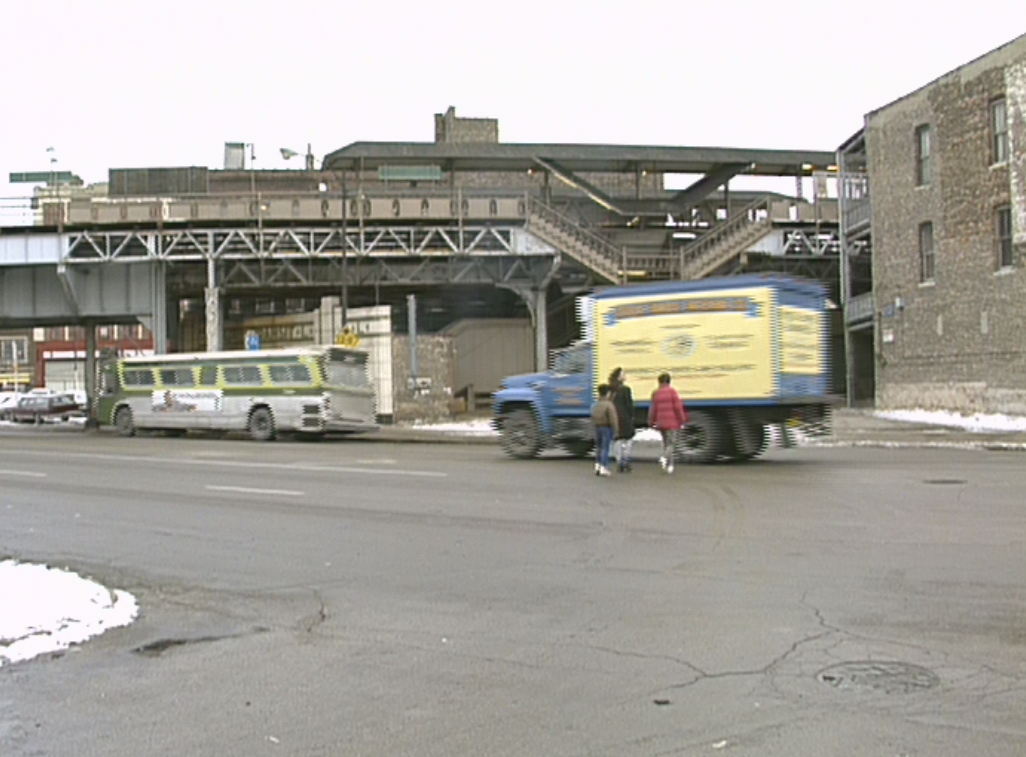
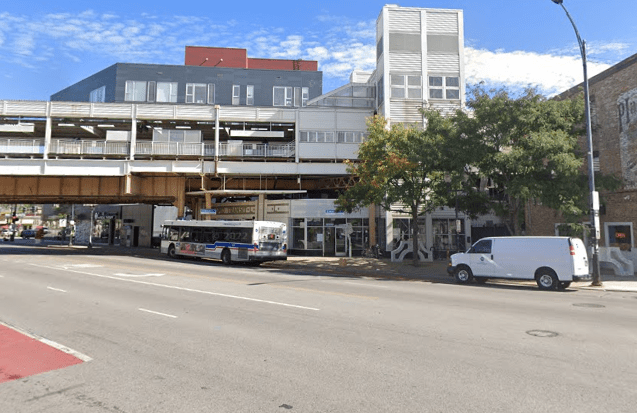
CTA Western Blue Line Station and bus: 1991 and 2022. 2022 photo courtesy Google Maps
When I initially enrolled in the Library and Information Science program at Dominican University in 2019, I aspired to a career in archives with A/V materials. The school has a robust archival studies program but there were no courses specific to this relatively niche field, so I’m incredibly grateful and lucky to have been accepted into the fellowship.
It gave me the chance to have hands-on experience, and to care for these materials I care about.
The PBPF also enabled me to meet many other people in the A/V archives field who have my dream job(s). We all have a shared interest in preserving the past through the medium of moving images and audio recordings, and I’ve found my new peers to be generous with their knowledge and experiences. In getting to know some of these people, who I now consider my peers, I recognize that this is another community and one that I now belong to.

 blog.americanarchive.org
Thank you for the work you did on this! My grandmother was Maria Enriquez de Allen. She was my art mentor and passed on her flower-making to me. I was beyond happy to come across the video! Her legacy and art continues as I work what she taught me and mentor others!