
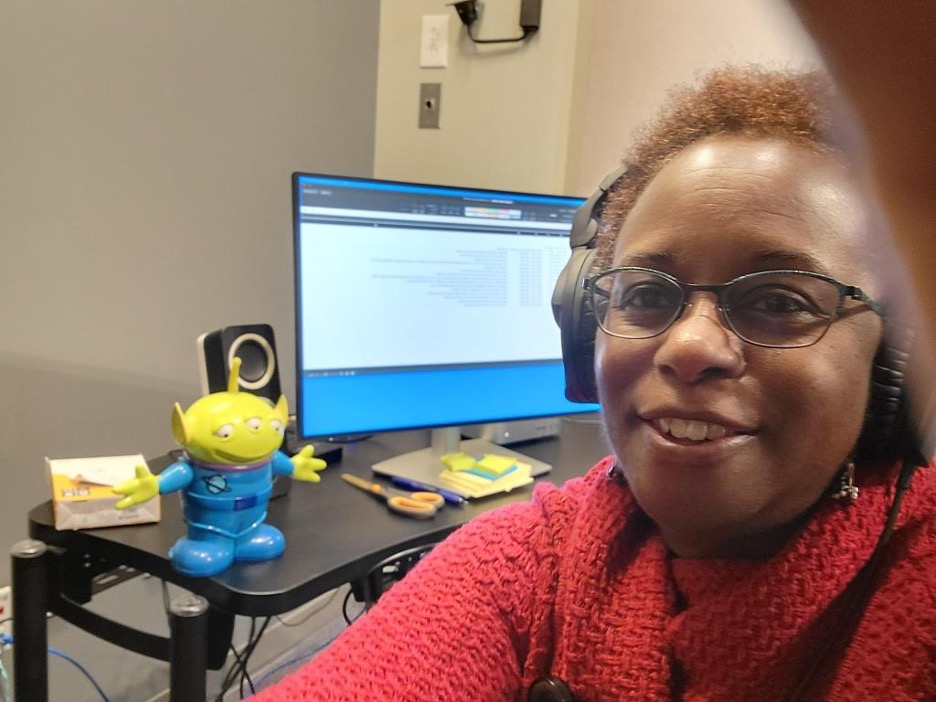
In the summer of 2022 faced with personal challenges that would ultimately end in tragedy, I grasped an exciting opportunity to participate in the American Archive of Public Broadcasting/Public Broadcasting Preservation Fellowship. Here is my journey.
Getting There
When onboarding with any new company it is important to complete a formal orientation to understand its mission, vision, and goals. Ask questions for clarification and be patient if adjustments are needed. For example, it took my company email account a day or so to recognize me. GPB Media has a meticulously thorough onboarding process that includes numerous online tutorials, videos, and real-time sessions with a Human Resources representative. A company ID badge and parking permit were necessary.
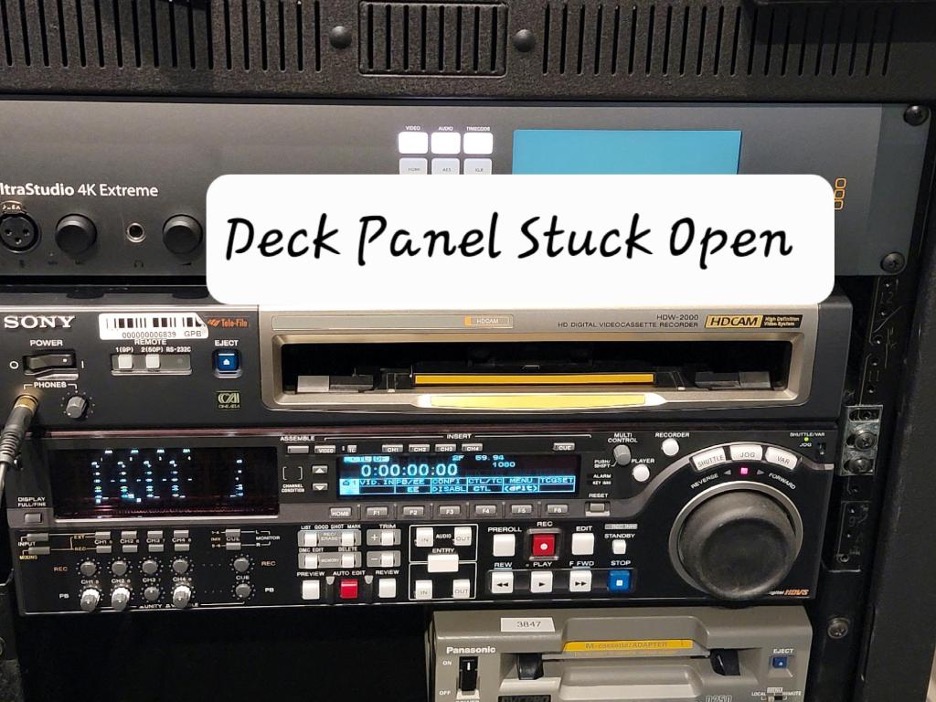
I was set up in a technology lab equipped with the following: 1) Flanders-Scientific LM – 1760W; 2) Sony HDCam – HDW-200 deck; 3) BlackMagic 12 SDI UltraStudio 4K Extreme; 4) Panasonic DVC Pro AJ D250; 5) Apple Mac Studio with M1 Ultra and 6) The external hard drive. I uploaded every manual I could find to acquaint myself with the equipment and took full advantage of the expertise of my assigned mentors. I was assigned to an impressive team. They have included: IT Engineers & Digital Archivists.
My Village

Jackie Jay, a videotape digitization specialist; the GPB engineering team lead by Technology Director Taylor Klotz; Kathy Christensen, a retired 20th Century Fox and CNN archivist; Rebecca Fraimow, Miranda Villesvik, and Casey Davis of GBH in Boston.
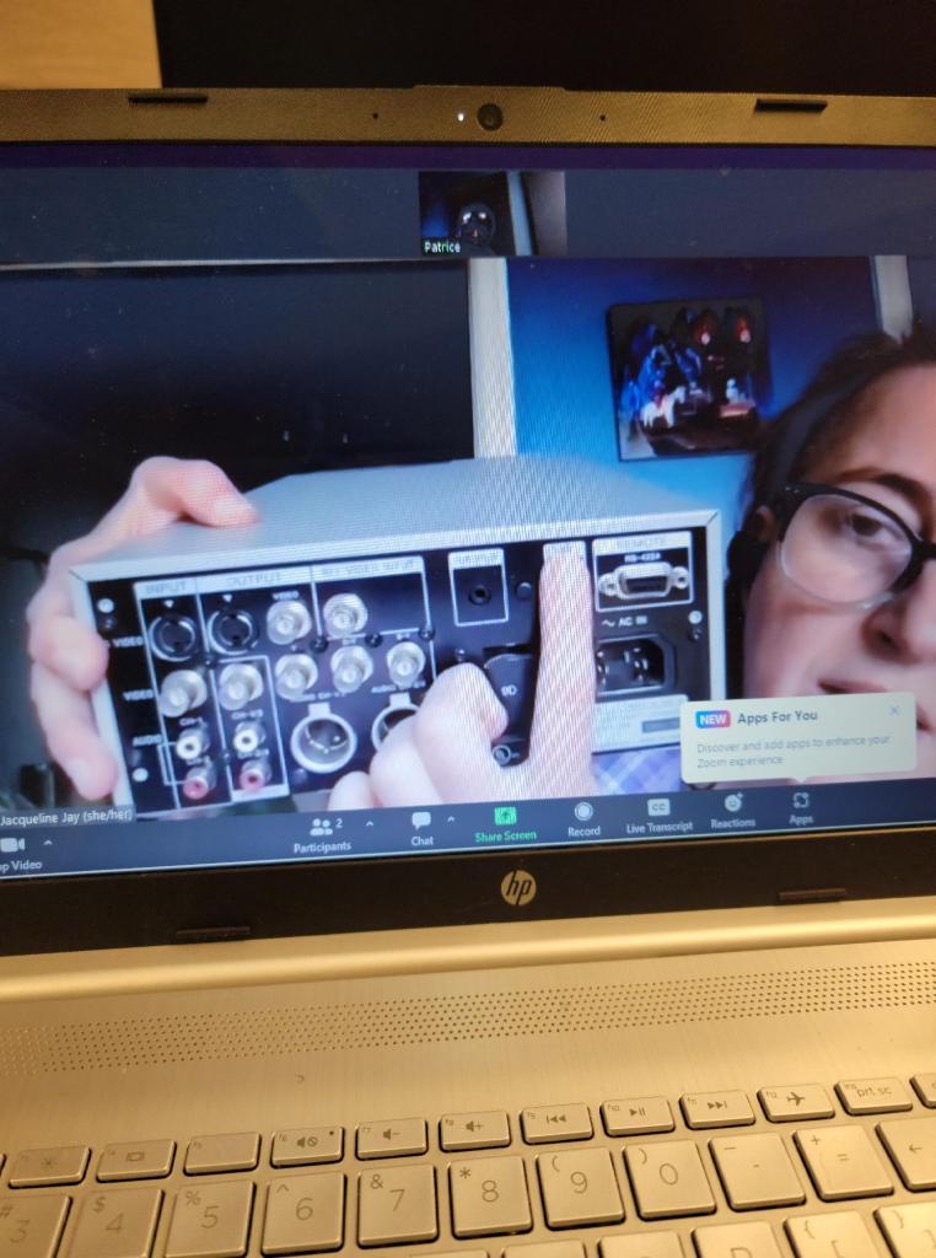
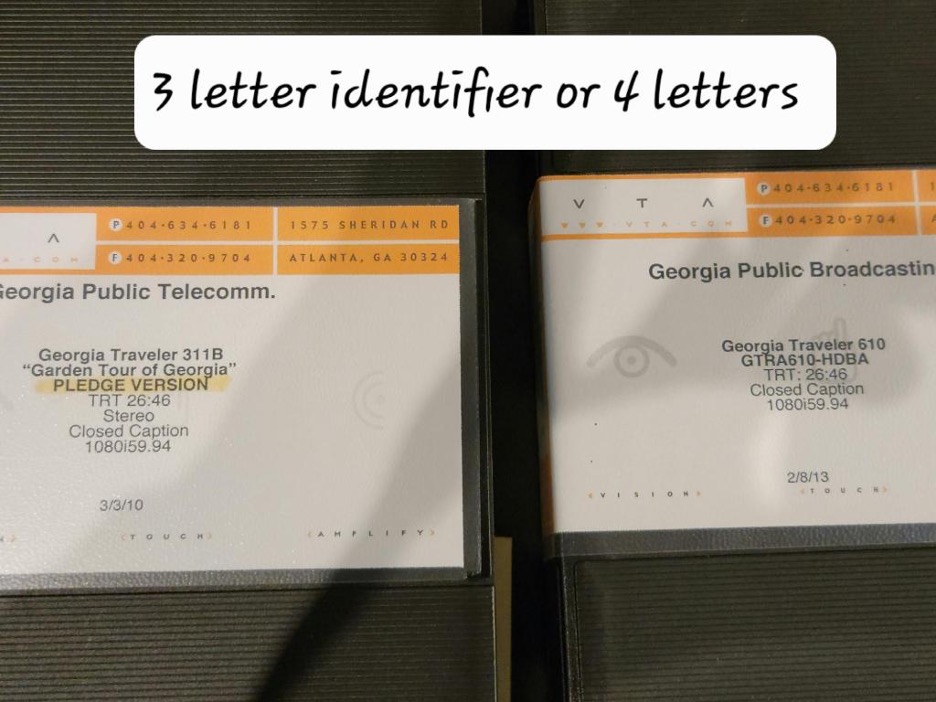
When the hardware was properly connected, the tapes were packed, the host organization sent me their local naming conventions. This is essential to map the descriptive data as you move through the project. Installing software such as BlackMagic Design, Disk Utility, Quick Time Player, MediaConch, QC Tools, PB Core, Homebrew, and FFMPeg. The setup must meet archival standards. Open communication with the onsite supervisor, the GBH team, the digital archivist, and your IT crew is critical to attaining a final product that is mutually beneficial. I worked with an interim faculty department chair during my internship. Also, if you are working within a fellowship or internship be certain to attend each supporting webinar or obtain a recording to view if you are absent. Training sponsored by the American Archive of Public Broadcasting/Public Broadcasting Preservation Fellowship during the summer of 2022 through spring 2023 usually lasted only an hour once or twice per month. Just as summer began the cohort was privileged to attend a three-day Immersion Training at the George Blood L.P. facility in Fort Washington, PA. Later that fall, we presented a poster to the Association of Moving Image Archivists (AMIA) at their annual conference in Pittsburgh. It was a great networking and reassuring to see wiser heads creatively addressing current challenges.
Deliverables
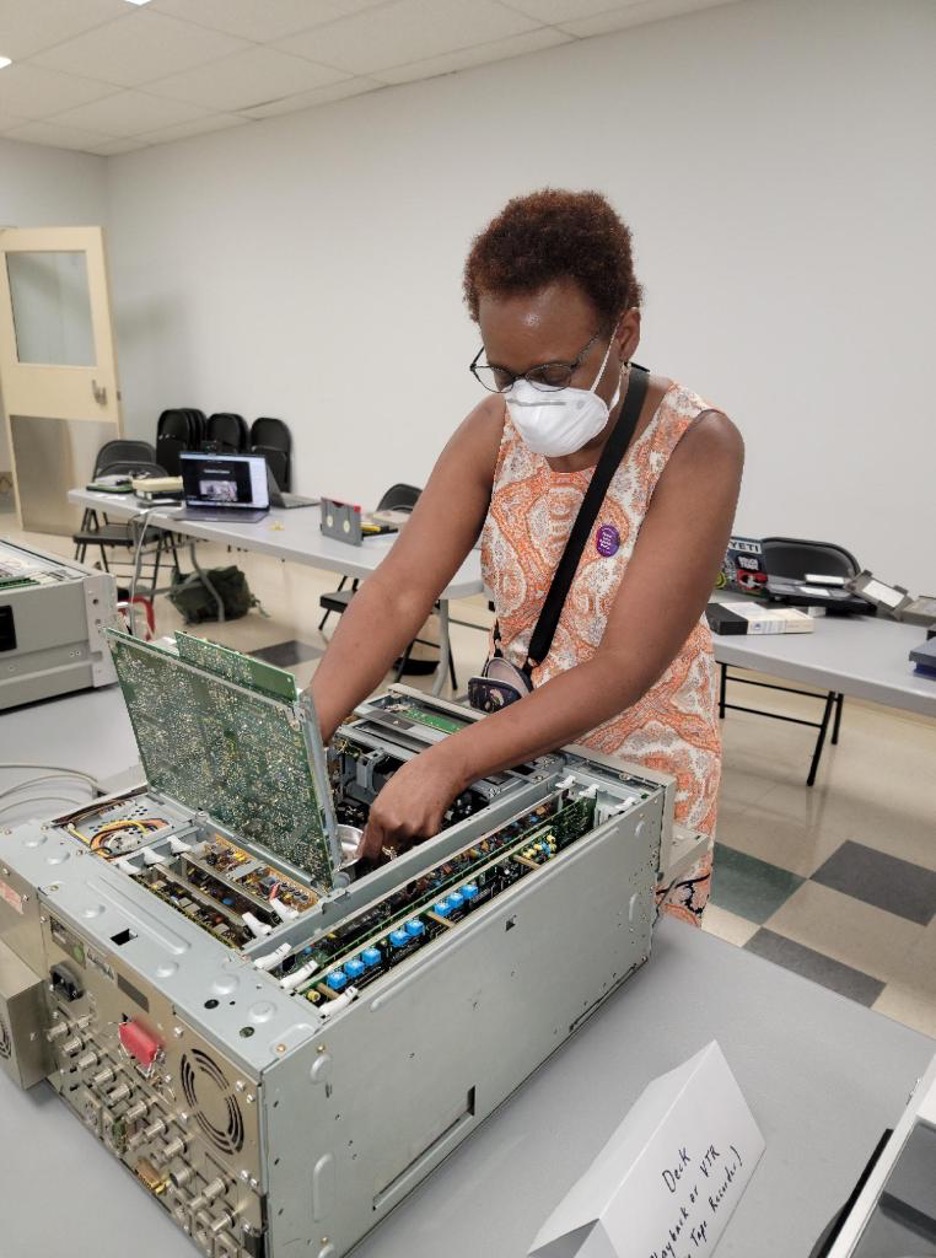
Elbows deep cleaning the heads at George Blood L.P. When all else fails, turn it off and turn it back on. It all builds toward these goals:
- Inventory
- Digitize
- Catalog
- Produce technical preservation metadata.
- Process files for ingest.
- Work with host organization to create digital preservation plan
- Collaborate with faculty Advisor to create a 5-page project handbook and video.
The Collection
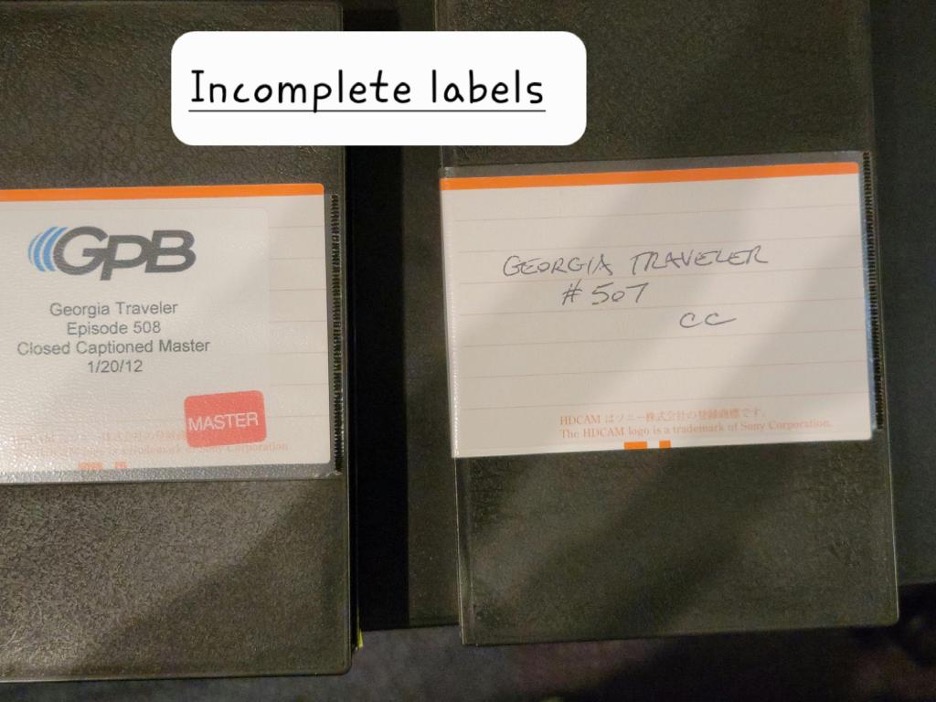
The station set aside three different collections to be digitized. Collection 1 included a television show that aired in the 2000s, called “Georgia Traveler.” The media is stored on Beta and DVCPro cassettes and XDCam discs. Collection 2 included high school basketball games from the mid to late 1990s. They are stored on DVCPro. Collection 3 included a television show called, Swampwise, that aired in the late 1980s to the early 1990s. This post frames its content only as it pertains to Collection 1.
Challenges Come in Many Forms
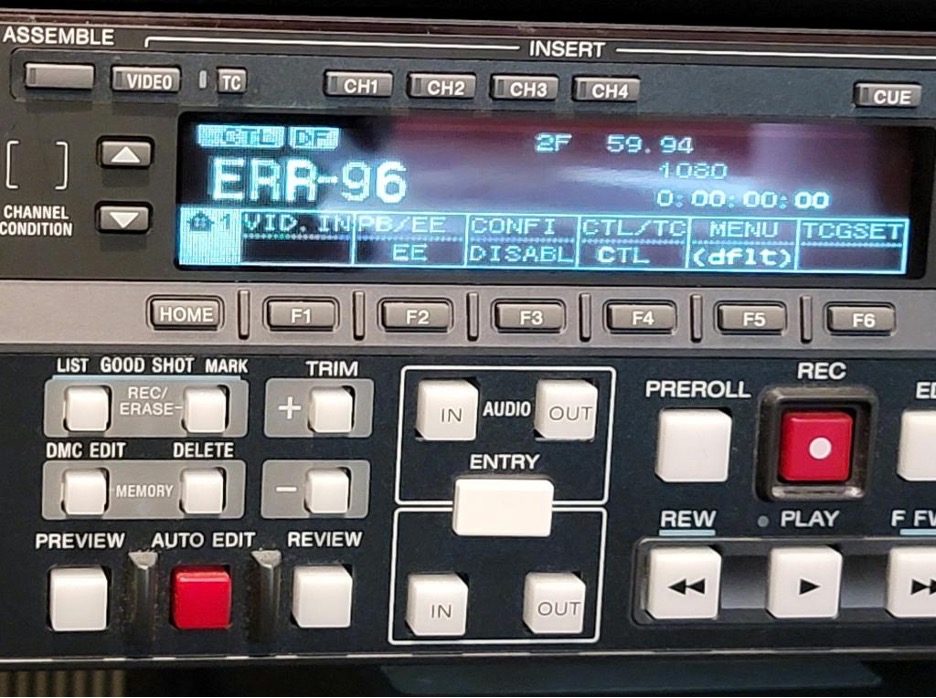
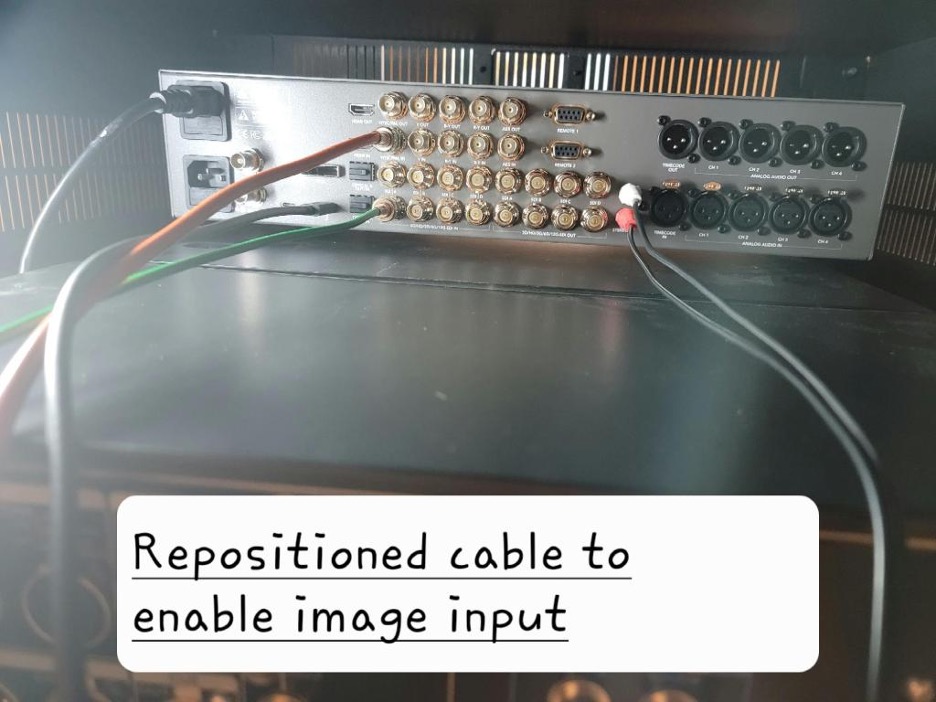
In retrospect, Spring presented recurring technical problems with Media Express that proved quite frustrating. The door tray to the HDCam deck would get stuck in the open position and would not accept tapes. I learned to begin my day as if I were starting a car. I allowed all the equipment to warm up 20-30 minutes before attempting any transfers to .mov files. HDCam tapes would stutter on playback, be out of sync, lose audio, or images would appear to be scissoring.
Transfer Issues
This can be very disconcerting especially when you have spent hours transferring data. I consulted with the IT department, and we concluded that the BlackMagic preferences needed to be amended from 1080i59.94 to ProRes422. The revised nomenclature must be added to the file names. oddly enough this fixed the stuttering, synchronizing and loss of audio issues.
Issues That Required Attention
I spent 16-24 hours each week for nearly a year learning participating in this fellowship. The experience was priceless. Never be afraid to ask for assistance. Always recheck your processes. Researchers depend on the data you preserve.
Deliverables II
Second semester could have seemed anticlimactic with all of the training, webinars, and presentations behind me. Each fellow was required to present a PowerPoint on their individual project, and we collaboratively presented a poster at AMIA, but polishing up the descriptive metadata and making certain the transfers were uploaded kept me busy. By this time regular employees began trickling back into the building after months of working remotely. Now I enjoyed background noises of pets in the hallways or babies interacting with co-workers. It was a nice change. I focused on quality control: checking spellings (Georgia use many native American names for geographic identifiers), running MD5 checksums, and clarifying file name discrepancies. As my tenure drew to a close I left with a feeling that my time was well spent and appreciated.

 blog.americanarchive.org
Nice post… And I hope you are OK!