
Hi there! My name is Jen Scott and I am one of the AAPB Preservation Fellows for the 2022-2023 school year. To give a little bit of background about myself, I received my MLIS in 2015 and began working in public libraries, starting in Teen Services, and then moving to Adult Services. Although I adored my career as a public librarian, I began to feel burnout mid-pandemic. I have always had an interest in being an archivist, but I never knew how to make the jump from public libraries to archives. After doing some research, I found the Post-Master’s Certificate in Digital Archives and Records Management at San José State University. I applied and enrolled in the program at the beginning of 2021.

During my time in the program, I took classes in Archives and Manuscripts, Metadata, Digital Curation, and Digitization. I learned about the AAPB Preservation Fellowship through one of my professors, and after looking into it, I knew I had to apply. I loved the idea of working with audiovisual materials, specifically video, and this fellowship seemed like an incredible way to gain experience in the field and learn more about the digital preservation world. Luckily for me, they also thought I would be a good fit, and I was awarded the fellowship.
Diving into the Work
I was doing my coursework online for the Post-Master’s Certificate, so getting this fellowship meant moving to a new state. It was a bit overwhelming when I first arrived, trying to figure out how to get started and communicating between all the different entities involved. But luckily I was set to work with some amazing people that helped me feel at home. This fellowship had me working with two sites: the Center for Asian American Media (CAAM), located in San Francisco, and the Bay Area Video Coalition (BAVC), located in Oakland. One of the first hurdles we encountered was how to physically transport the tapes from one location to another. It took some juggling and lots of communication to figure out the logistics of getting started, but once we got everything figured out, I was able to jump right into the work.
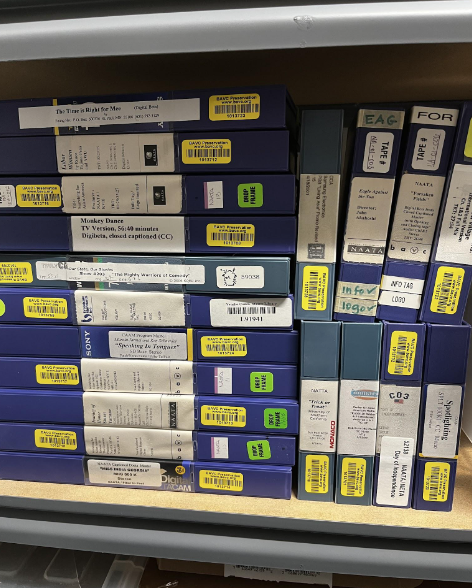
Because we had to transfer the tapes from one location to another, and I couldn’t physically be in CAAM’s archives, we decided the best course of action was for a CAAM employee to pack up all the tapes of one format, and bring them to BAVC’s office for me to sort through and intake. We decided on bringing over all of the DigiBeta tapes, which ended up being 7 boxes. One of my first tasks was to inventory the DigiBeta tapes, and intake them into Salesforce, the software BAVC uses to keep track of their digitization projects. I had several parameters for the selection of the tapes to be digitized, which included that they hadn’t previously been digitized and the content needed to have been broadcast on public media. I ended up intaking 74 tapes.

After intaking the tapes, I was able to start transferring the tapes. I was lucky to be working at a preservation department, so they already had the equipment and set-up. My local mentor took me through the process of syncing all of the equipment and creating a signal flow, and then I was able to start digitizing. This was a completely new field of work for me, so I was incredibly grateful to be surrounded by highly knowledgeable, skilled people who guided me through the work and answered all of my questions. BAVC has many educational resources, including a video about common video errors to help me as I learned the ins and outs of video digitization. I loved learning all of the technical aspects of the work, but it was also fascinating being able to dive into the content of the videotapes from CAAM’s archives.
About the Collection
Appreciation and Looking Forward

CAAM’s mission is to “present stories that convey the richness and diversity of Asian American experiences to the broadest audience possible”. The videos I digitized portray a range of Asian American experiences and explore themes including war and politics, culture clash and culture assimilation, discovering one’s roots, and dealing with racism. The videos also feature an array of traditions, customs, and manners of Asian ethnicities, from Chinese, Japanese, Cambodian, and Vietnamese to Filipino, Indonesian, Pakistani, and many more. It’s been so enriching watching documentaries like The Split Horn, which follows a Hmong Shaman and his family who were transplanted in the United States after living in Laos, and how they continued to honor their traditions and spirituality while adjusting to a new culture. I also loved watching Asian American-made films and short films, including the film Yellow by Chris Chan Lee, about a Korean American teenager who gets robbed while working at his dad’s grocery store and rallies his friends together to recover the money. This film was independently funded, and you can tell the heart that went into the making of it. It also features some wonderful Asian American actors, including John Cho in his film debut. It has been such a powerful experience seeing the experiences captured and presented in these films and documentaries. It’s been a special experience being a part of preserving these stories and making them more accessible.
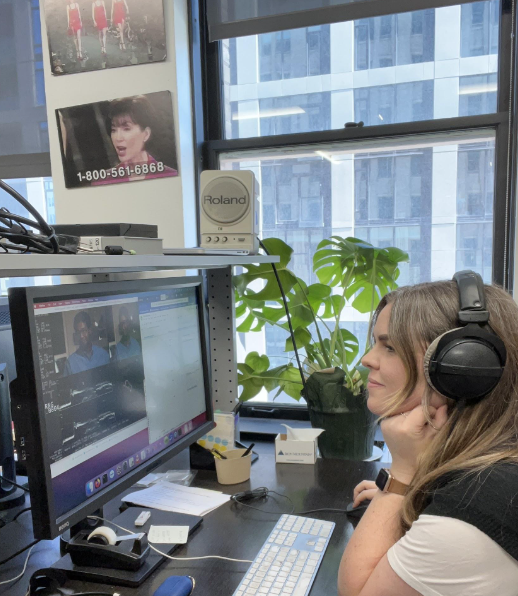
I had such an amazing experience in this fellowship and learned so much in a relatively short amount of time. Although I was only able to work with one format for CAAM’s tapes, I had the benefit of working in a preservation department, so I was able to occasionally help with other projects and get hands-on experience with other formats like VHS and U-Matic. It was also really beneficial to see the flow of an audiovisual preservation organization, so I could gain a broader perspective of what this career entails. I loved seeing the types of projects BAVC was working on, and seeing how they managed workflow, clients, and individual duties.
One major benefit I was able to gain from this fellowship was the opportunity to network and meet professionals in the field. My co-workers at BAVC have been so enthusiastic about helping me meet and contact people who are already in the field, working at jobs or organizations I’m interested in working with in the future.
I’d like to give a HUGE thank you to all of the people who guided me through this process, answered my questions, and connected me to people and resources to help further my career. Kelley Coyne, my local mentor at BAVC, has been a gem. She has shared her expertise in video preservation with me, and has made my experience so enjoyable and lovely. James Ott, my point of contact at CAAM, which made my onboarding experience and time with CAAM smooth and stress-free. Alyce Scott, my incredible faculty advisor, for sending me resources and being willing to help along the way. Rebecca Fraimow and Miranda Villesvik at GBH for always being available to answer questions that cropped up throughout the fellowship. And everyone that works at BAVC and CAAM for allowing me to be a part of your organizations for a short period of time. I’ve absolutely loved my experience in this fellowship, and will be forever grateful for the knowledge and skills gained, and the people I’ve met as I continue my career in archives.

 blog.americanarchive.org